
Our Services
High Point Speech Therapy provides screenings, evaluations, and speech therapy treatment sessions for the following areas:
Delayed Speech & Language
Speech and language development can vary from child to child, but there are general milestones that guide how and when communication skills typically emerge. When delays are identified early, therapy can play an important role in helping children build the foundational skills they need to express themselves, understand others, and engage with the world around them.
Our early intervention services, designed for children from birth to age three, focus on supporting development during this critical window of growth. We work closely with families to create personalized, play-based strategies that encourage progress in a natural and supportive way. By partnering with parents and caregivers, we help foster confidence, connection, and communication both in and out of the therapy setting.
Next Steps→
Childhood Apraxia of Speech (CAS)
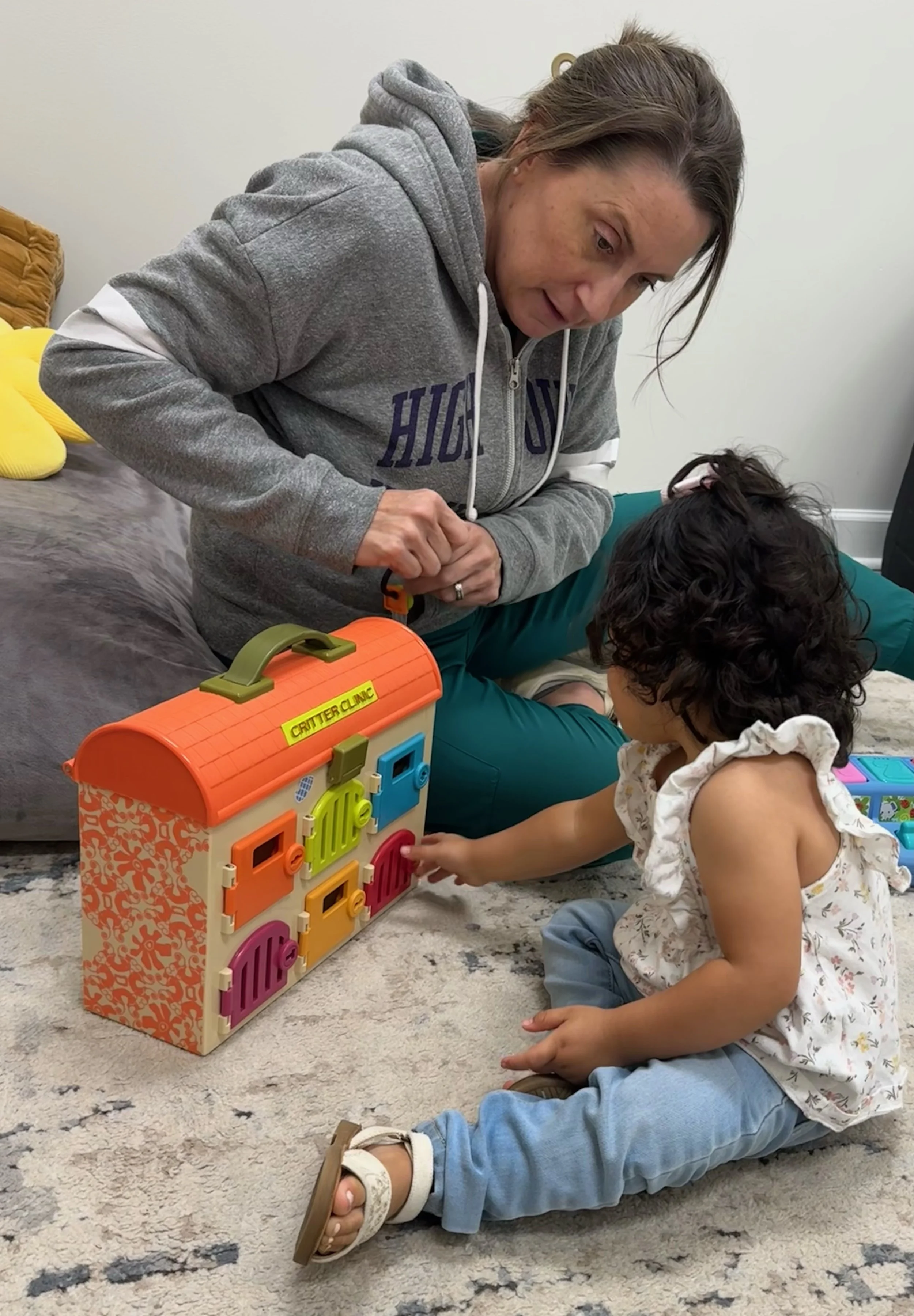
Childhood Apraxia of Speech (CAS) is a motor speech disorder that impacts a child’s ability to plan and produce the precise movements needed for clear speech. While the muscles themselves are not weak, the brain has difficulty coordinating the lips, tongue, and jaw to form sounds, syllables, and words. This can make a child’s speech difficult to understand and may lead to frustration when they know what they want to say but cannot express it clearly.
Because CAS can look similar to other speech sound disorders, an accurate diagnosis by a speech-language pathologist is essential. Our team uses specialized evaluation and therapy techniques tailored to each child’s needs, focusing on improving motor planning, building consistency in speech, and increasing overall confidence in communication. We also work closely with families to provide tools and strategies that support progress beyond the therapy session.
Next Steps→
Articulation & Phonology
As children develop language, it is normal for them to make speech sound errors while learning new words and sounds. However, when these errors persist beyond expected age ranges, it may indicate a speech sound disorder. Each sound develops on its own timeline, and understanding what is age-appropriate helps determine when additional support may be needed.
Speech sound disorders typically fall into two categories: articulation disorders and phonological disorders. Articulation difficulties involve challenges physically producing specific sounds, while phonological disorders involve patterns of sound errors that affect overall speech clarity. Speech therapy helps children improve intelligibility by targeting these patterns in a structured, supportive, and engaging way that builds both skill and confidence.
Next Steps→
Expressive Language
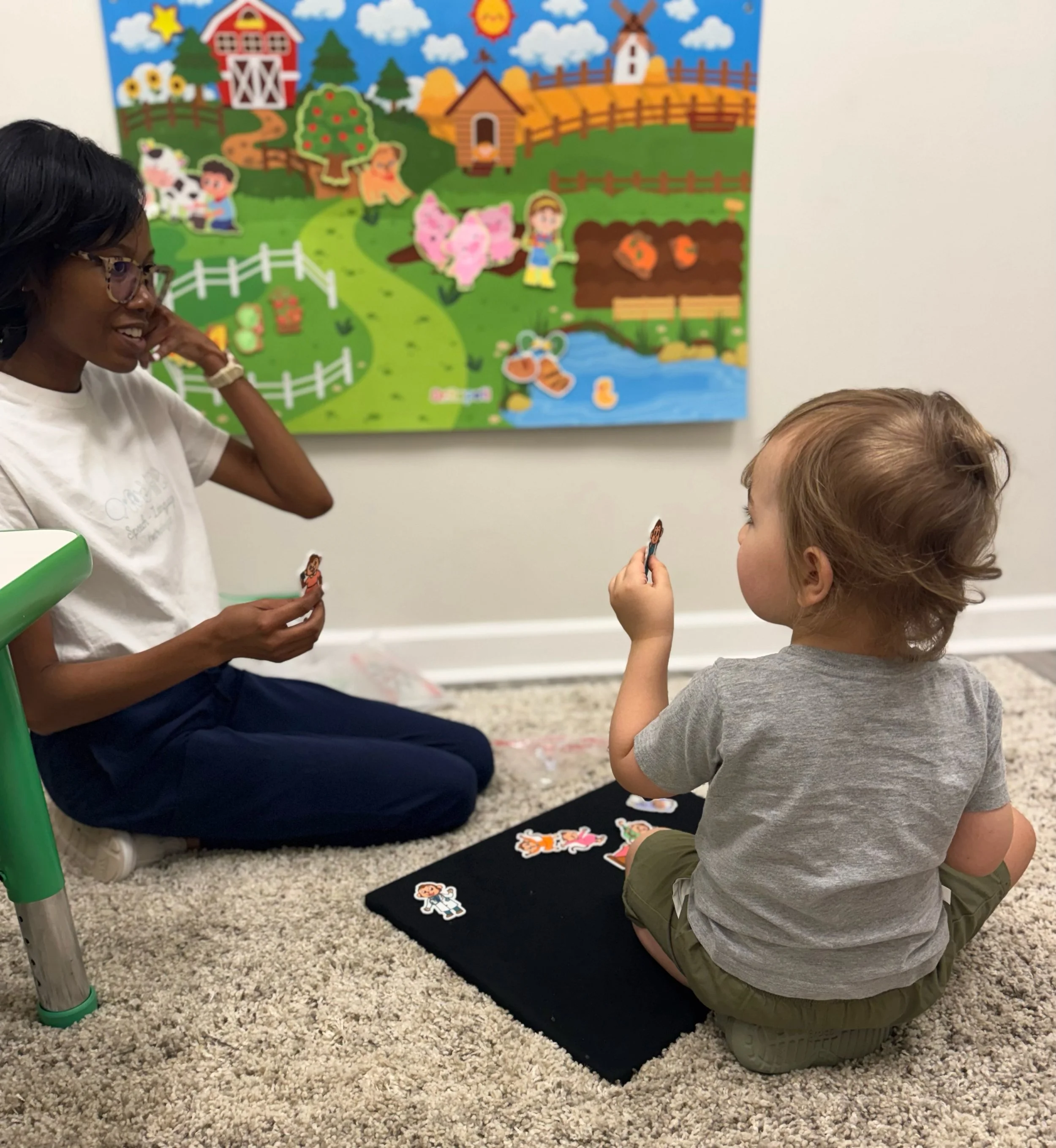
Expressive language refers to a child’s ability to communicate their thoughts, needs, and ideas to others. This includes a wide range of skills that develop over time, such as asking questions, naming objects, using gestures, forming sentences, and using appropriate grammar like pronouns (“he,” “she,” “they”). It also includes early communication skills like engaging in conversation, using language to interact with others, and participating in songs, rhymes, and play-based exchanges.
When expressive language skills are delayed or difficult to develop, children may struggle to make themselves understood or fully participate in everyday interactions. Speech therapy helps strengthen these skills through structured, play-based activities that build vocabulary, sentence formation, and conversational abilities. Our goal is to support children in becoming confident communicators who can express themselves clearly and meaningfully across environments.
Next Steps→
Fluency & Stuttering
Fluency refers to the smoothness and flow of speech. Stuttering is a communication disorder that interrupts this flow through repetitions of sounds, syllables, or words, prolongations of sounds, or “blocks” where no sound comes out at all. Some children may also show physical signs of effort while speaking, such as facial tension, blinking, or other body movements.
Stuttering most often begins between the ages of 2 and 6, a time when speech and language are developing rapidly. It is also important to know that many children experience short periods of normal disfluency that resolve on their own within about six months. However, when stuttering persists beyond this timeframe or begins to impact communication or confidence, speech therapy may be recommended. Therapy focuses on supporting smoother speech, reducing tension and frustration, and helping children feel more confident when communicating.
Next Steps→
Receptive Language
Receptive language refers to a child’s ability to understand words, sentences, and meaning in spoken communication. These skills are the foundation for learning and interaction and include understanding gestures, following directions, answering questions, identifying objects and pictures, and taking turns in conversation.
When receptive language skills are delayed, children may have difficulty processing what others are saying, which can affect their ability to participate in school, play, and social situations. Speech therapy focuses on strengthening comprehension skills through structured, engaging activities that build understanding, improve attention to language, and support successful communication in daily life.
Next Steps→
Augmentative and Alternative Communication (ACC)
Augmentative and Alternative Communication (AAC) includes a variety of tools and strategies that support communication for individuals who have difficulty using verbal speech. AAC may include gestures, picture boards, communication books, or speech-generating devices, depending on each individual’s strengths and needs. These systems are designed to give children a reliable way to communicate and participate more fully in everyday life.
AAC does not prevent or replace spoken language development. In many cases, it can actually support and encourage communication growth. Our team works closely with families to determine the most appropriate communication system and provide individualized therapy that helps children use AAC confidently across home, school, and community settings. The goal is always to empower children with meaningful ways to connect, communicate, and engage with the world around them.
Next Steps→
We’re Here to Support Your Family. Help Your Child Find Their Voice.

“High Point Speech Therapy has been such a great experience! From Kirsten helping us get everything set up to working with Mrs. Sam, the care has been exceptional. Both are incredibly kind and knowledgeable, and my daughter truly loved her time in speech therapy with Mrs. Sam!”
-Lane, High Point Speech Therapy Parent